Showing posts with label Memory. Show all posts

1/3/21

New habits for the new year

Recently I finished a book called The Power of Habit by Charles Duhigg. This book sat on my "To-Read" shelf in Goodreads since 2016! It was time, and there was no better time, frankly. 

Interestingly, I gave this book a piddly 3 of 5 star rating. When I looked it up for this post, I updated it to four. I haven't stopped thinking about this book for the last couple of weeks. It prepared me to get ready to make real changes in the new year with a focus on good habits.

The book talks about both sides of the habit coin - the good and the bad. Exercise is a great habit. Gambling is not. Habits give our brains the ability to go into auto pilot on some things (morning hygiene, driving to work, etc.) so that we can give energy and literal thought to other, more complex stuff, like reading, using a new tool, solving an equation, etc. 

I FINALLY learned more about the "reptile" part of the human brain - the great basal ganglia. It's a more primitive part of the brain that is about the size of a golf ball and is "primarily for motor control, as well as other roles such as motor learning, executive functions and behaviors, and emotions." This area controls your habits. 

My favorite and most actionable learning from this title was about the habit loop. This really simplified it for me and got me thinking about my own habits. This habit loop helped me articulate three simple, new habits for 2021. 

Water Habit.

  • Cue: "Dang, I'm dehydrated." 
  • Routine: Every morning after I make my coffee, I now also empty the tea kettle and prepare some drinking water for the day. The reason I have drinking water out of the kettle is because I hate buying plastic bottles and I have sensitive teeth, so a nice, tall glass of lukewarm water is my jam. I fill up the kettle and boil it for the next morning. 
  • Reward: As I ripen, dehydration impacts me a LOT more, so I'm trying to stay juiced with H2O. I have fewer stomach problems, my skin is less dry, and I avoid sugary beverages and snacks by constantly sipping.

Breakfast Habit. 

  • Cue: My stomach contracts into painful hunger pangs throughout day. Also, need to take Vitamin D with a meal. Was scolded by primary physician. 😒
  • Routine: While I mention oatmeal in that example, I'm really going to focus on keeping breakfast quick and simple. I'm going to bore myself to death with a week-long, repetitive breakfast with the goal of taking my Vitamin D with a meal. So far so good, but I have a lot of oatmeal I don't want to waste, so I will be bored to death with oatmeal breakfast until spring, probably. I will say this - I get really friggin' intense hunger pangs in the morning. The moment some coffee hits the belly, it triggers my metabolism in an unpleasant way. 
  • Reward: Since I've been eating this boring ass oatmeal every day, I haven't had hunger pangs at all and my appetite is a little less, uh, ravenous throughout the day.

Gratitude Morning Meditation. There are lots of studies out there that tell us the positive impacts of gratitude. Feeling grateful for stuff is a practice in mindfulness. And while it's not easy for me to sit still, I know I have time for this quick meditation. 

  • Cue: It's important to feel gratitude every day and preferably first thing in the morning.
  • Routine: Set timer for one minute and focus on or say aloud the following: "I am grateful for this water. I am grateful for this food." (I should mix in a few Sun Salutations or a walk with this habit, but let's not get ahead of ourselves.)
  • Reward: I will have set the tone for the day. Even if the rest of the day falls apart, I will have started the day being grateful and positive. 

Yes, these are pretty boring, lowkey resolutions, if you even want to call them that. But they were spawned by the ideas around habits and how they form. I'm also quite interested in getting more and more habits developed, but I don't want to overload myself and get discouraged. 

This year, I'm looking at habits around writing and reading that are more specific than I've committed to before. Reading more and writing more is great, but what does that even really mean? I really started listing out some initial goals and thoughts. A blog post a month. An article for a newsletter I put together for a group at work. And journaling and counting how much I write every day. The word count has been eye-opening. 

One of the most important points that I picked up from Duhigg's book is that following and maintaining good habits leads to more good habits. And shortly after finishing the book, I heard Seth Godin on the Design Matters podcast, where he said: “Do enough bad stuff, and some good stuff is going to slip through, no matter how hard you try.” The quote captures the design thinking spirit. It let me break free of worrying about the perfect being the enemy of the good, but it also got me thinking about getting my writing out of my personal journals and notes and into the world, beyond what I do for a living. Design thinking comes through again, friends.

Good habits will lead to good things. And let's be honest, after 2020, we can all use a little more good in our lives. Cheers. 

7/28/18

Storytelling and Identity Cooking

Henry David Thoreau said that "An early-morning walk is a blessing for the whole day." My walk this morning certainly was. It's not only the fact I'm out and about, moving my feet, enjoying a perfect Michigan morning, but it's also what I'm listening to. Today, I tried out two new podcasts and wanted to share them with you.

Terrible, Thanks for Asking
Without a doubt, I subscribed to this podcast because of its name. The first episode I listened to today was episode #41 and it's called The Stories We Tell. As a fundraiser, my work is based on relationships and storytelling is an important part of that, so I'm always looking to hear stories from all walks of life. This particular episode had me tearing up for a number of reasons: it was a story of a daughter's relationship with her parents, how memory fails us, how stories change and family myths are born. However, when I really got emotional was when the father started talking about how important HIS father found education. In Laos, in the early 20th century, a man felt as passionate about educating his kid because he knew it was a way out of abject poverty. He was right. I learned a little bit about the "Secret War" that was happening concurrently with the Vietnam War in that part of the world. Finally, I was so delighted to hear that the matriarch of the family, after being on the podcast, wrote and sang a song about her family's experience.  So cool! It is a haunting song. I think this podcasts has some interesting surprises, so this is about as detailed as I get, but I highly recommend this podcast and this episode. I think Nora McInerny is great. She describes her podcast as "a funny/sad/uncomfortable podcast about talking honestly about our pain, our awkwardness, and our humanness, which is not an actual word." Definitely my jam.

To the Best of Our Knowledge
Closely following Terrible, Thanks for Asking, I took in my first episode of the Wisconsin Public Radio's To the Best of Our Knowledge. I browsed some of the episode topics and felt that there was quite a potpourri of knowledge to sift through. Since I am trying to expose myself to more random bits of knowledge lately, this was exactly what I sought in a podcast. It did not disappoint. The episode was In Search of "Real" Food. First, Simran Sethi talked all about chocolate and how there are actually 14 gene clusters of chocolate across the world. At first I didn't get her point, but by the end of the segment, I knew that it was to savor and truly appreciate the food that we love, like excellent chocolate. REAL chocolate. Then I discovered the author Michael Twitty, who wrote The Cooking Gene: A Journey through African-American Culinary History in the Old South. He was fascinating because his cooking is at the cross-section of African American, Jewish and gay culture. He is so connected to his ancestors through his cooking. It's amazing. This entire episode made me really think about how flavors tell stories.

So my walk this morning was great because I got to discover and listen to two new, excellent podcasts. I hope you get a chance to enjoy one of these. Never stop telling stories! And never stop listening to them.

10/30/15

Year of Gratitude - Day 303 - They Softly Walk

The outpouring of love I have experienced recently has been a true gift of comfort. Today I received a card with excerpts of Hugh Robert Orr's "They Softly Walk" written inside. It is so perfect and comforting. I am grateful for such thoughtful people in my life, especially now.

They Softly Walk - Hugh Robert Orr

They are not gone who pass
Beyond the clasp of hand,
Out from the strong embrace.
They are but come so close
We need not grope with hands,
Nor look to see, nor try
To catch the sound of feet.
They have put off their shoes
Softly to walk by day
Within our thoughts, to tread
At night our dream-led paths
Of sleep.

...

They are not dead who live
In hearts they leave behind.
In those whom they have blessed
They live a life again,
And shall live through the years
Eternal life, and grow
Each day more beautiful
As time declares their good,
Forgets the rest, and proves
Their immortality.

11/16/13

30 Days of Gratitude: Day 16 - Immigrant Memoir Group

A few years back, I scored a writing gig that I wanted to share with an old professor. Dr. Stockton was my political science professor at University of Michigan-Dearborn. He responded and invited me to an immigrant memoir writing group. The writings of this group would be preserved by the University Archives in Ann Arbor. While I'm still quite far from submitting to the archives, I think this is such an important project that will preserve the perspective of my generation's cultural experience.

My writing has gone slowly as I have been preoccupied with many things, but I am still so grateful to have met all of these people. Even though I came to the United States when I was three, making me pretty Americanized, I have been fascinated by the similarities of other immigrants growing up in America. Sometimes we agree, sometimes we don't. Sometimes we cry and sometimes we laugh. We don't all know each other well, but we consider each other friends and have shared with each other intimate details of the immigrant experience. Most importantly, we listen to each other and learn from each other. It's a special group and I am most fortunate to be a part of it.

2/21/10

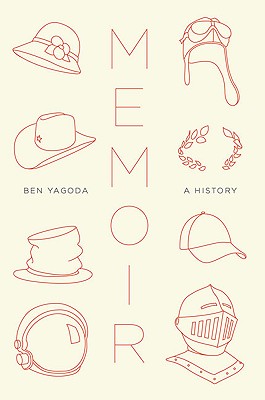
Book Review: Memoir: A History

Memoir: A History
Ben Yagoda

The reason I picked up this book and started reading immediately was twofold: 1) I wanted to learn a little more about memoirs to understand how to approach my own and 2) because if I didn't read it quick-style, I was going to get a library fine. Library fines are embarrassing and I've been getting burned lately for my book bogarting. After finishing it, I think I had a better historical understanding of the memoir and how it's developed over time. The book did not, however, help me when it came to writing my own.

Memory had an entire chapter dedicated to it and for obvious reasons. It was sort of comforting to me, because my childhood memories were already limited. I thought perhaps I just had an inheritently bad memory, but memories fade for everyone when time passes. The memory chapter was my favorite and it piqued my interest even more on the topic. The fact that our memories are doomed to be faulty is an additional motivator to keep working at my memoir. That stuffs not going to be there forever!

There's a soft spot in my heart for books on writing. Sometimes this has a negative effect on my writing output. If you're reading than you're not writing, but I really can't help myself. I became familiar with Ben Yagoda when I learned about his book The Sound on the Page. I had started exploring fiction writing. Yet, as I am in the process of capturing the first 27 years of my life, I thought a book about memoirs would be quickly applicable and relevant.

The book was full of good information. For example I learned the difference between a memoir and biography. The first is about a certain theme or time span in life and the latter is about an entire life. I also enjoyed learning the four principles embodied in Jean-Jacques Rousseau's classic The Confessions. These principles, according to Yagoda, are commonplace now, but back in Rousseau's time were revolutionary. They are:
  1. a belief in total frankness
  2. an emphasis on the inner life of the mind and emotions rather than on the external of the the action
  3. a significant attention to childhood and youth
  4. a recognition that mundane matters, like a lie about a ribbon, could be as earth shattering as a grand battle, maybe even more so
The reading was tedious, but it's not Yagoda's fault. He has to cite many different memoirs and it often reads like a literature review. There are good parts nestled in between, to be sure. Yet, when he began about modern memoirs that I had read and was already interested in, the reading exhausted my attention and I really just wanted to get through it. I only scribbled down one quote from the Duke of Wellington:
"Publish and be damned." (p. 69)
All and all, this wasn't too bad of a book. I actually found a lot of memoirs that I'd like to read. Some are quite old, so finding them will require a little extra effort. The reading wasn't easy, but I am still definitely interested in Yagoda's other titles. I am particularly excited to read about the history of one of my favorite publications, the New Yorker. It's called About Town: The New Yorker And The World It Made. Publisher's Weekly called that one both "compelling" and "slow-moving", which is not a bad description of Memoir: A History as well.

11/30/09

In management, learning always keeps it interesting...for everyone involved.

Management is thrilling. It has been enormously fun and interesting, but my favorite part is how much I've been learning. I got a call from a colleague that I was going to be a member of CASE (Council for Advancement and Support of Education). This was great because I've always been involved with professional organizations. I had left academia for a couple years and I think this is a great way to re-introduce myself in a formal way. Professional organizations are always worth it and this one appears to have a lot of interesting and relevant resources.

Also, last week I went to a Fred Pryor seminar called "Essential Skills for First-time Managers or Supervisors." I went on the recommendation of a colleague and it was awesome. It was particularly awesome because in three months I got a smorgasbord of issues to deal with as a manager and heard about how to handle them at this seminar. I was happy to hear that in a lot of ways I was actually doing okay. Afterward, I was looking through my notes and found a few quick snippets that were covered at the seminar:
  • One must be CRYSTAL clear.
  • Document everything.
  • Give employees the priority list.
  • Get creative with incentives for your employees.
  • Hire people smarter than you.
The first three things I think I've accomplished and continue to make a regular part of my work day as best I can. The last two are a couple of nuggets that I picked up at the seminar and I'm particularly intrigued by the last one and it makes perfect sense.

My favorite part of the seminar was the importance placed on reading. One of the essentials was "Read, read, read." It made me think about how I could role that into an employee incentive. By giving them time to read, they can back away from the computer and learn on company time should the week's workload allow for it. Giving them this time could also lead to increased creativity and enhance their knowledge on topics like philanthropy, business and higher education.

Inspired by the message to read, read, read, I totally got pulled into buying something. It seems "too good to be true" but this is my second Fred Pryor/CareerTrack and I've heard amazing stories about the Evelyn Wood Reading Dynamics System. Both speakers said they've shared this with their families; both swore it changed their life and one of them told me they've never, ever had one returned. It's supposed to drastically improve your reading speed and, more importantly, increase your retention. So I went for it. I love reading, but I use that lame excuse "There's no time to read." I've been trying to carve in time, but now I'm going to try to take it one level further and give this a shot. I will definitely post my experience once I'm done with the program.

8/6/08

Book Review: Slaughterhouse 5

Slaughterhouse 5
by Kurt Vonnegut

A little bit ago, I found this cool blog with a bunch of literary tattoos called Contrariwise. Although I highly doubt I'll ever get tattooed, I'm always intrigued by what others decide to burn into their skin indefinitely. I found some repeats: tattoos about the Little Prince, The Giving Tree, Dr. Seuss references, tons of elvish writing and a boatload of Kurt Vonnegut snippets out of Slaughterhouse 5. Hence, I thought that if people were permanently putting his words into their skin, I thought that reading his book would be worthwhile. It was.

This book is essentially about a guy in World War II and the firebombing of Dresden, Germany. It's sort of a mind-bender, as the main character, Billy Pilgrim, travels through time, visits an alien planet and survives the ferocious firebombing of Dresden.

Although there's the science fiction twists of aliens and time travel, I actually think that is a bit of a distraction created by the author. The whole time travel concept really made me think about memory and its preservation. I've heard some criticism about this book minimizing the Holocaust, but I thought nothing of the sort. I actually thought it complimented the entire idea of memory during WWII, but this was a story from a very different perspective, namely, the American soldier perspective.

After each mention of death, there is the pictured phrase, "So it goes." It is repeated many, many times, giving a reader an idea of how often in life we experience death. I have found myself using this little phrase more and more often in my own speech. I guess you really are what you read!

Anyway, here's a couple passages I particularly enjoyed:

"Trout, incidentally, had written a book about a money tree. It had twenty-dollar bills for leaves. Its flowers were government bonds. Its fruit was diamonds. It attracted human beings who killed each other around the roots and
made very good fertilizer.
So it goes." (p. 159)

"Now he quoted Theodore Roosevelt, whom he resembled a lot: 'I could carve a better man out of a banana.'" (p. 176)

4/25/08

On Memory and Attention Spans

Nostalgia alert: I remember reading an article called the Incredible Shrinking Sound Bite in one of my undergraduate courses years ago. I reread it the other day and this made me think of Americans' shrinking attention span (and this was written in 1990!):
An analysis of all weekday evening network newscasts (over 280) from Labor Day to Election Day in 1968 and 1988 reveals that the average "sound bite" fell from 42.3 seconds in 1968 to only 9.8 seconds in 1988. Meanwhile the time the networks devoted to visuals of the candidates, accompanied by their words, increased by more than 300 percent.
I think in a way the internet both helps and hinders in a situation like this. Helps because people can cruise over to YouTube or iTunes and get newscasts, speeches, transcripts, etc. We can essentially pay as much or as little attention to candidates as we want. In the same breath, I think that the internet is also crushing our already feeble attention span. We are overloaded and I'm not sure how much information we're really retaining.

I wondered what impact these tiny spurts of attention will have on a more collective human memory. Because we pay attention to much more content in much shorter intervals, does that create huge gaps in our memories? Or does this information overload provide a workable outline in our thinking? How do we fill in an outline of very vague happenings or mere news headlines with actual substanance? Do the shorter but more diverse clips and sound bites paint a complete picture of reality? Is that picture accurate?

I found some interesting facts on short attention spans from a May 2000 USA Today Magazine article entitled "TELEVISION NEWS: INFORMATION OR INFOTAINMENT? by Michael Medved:
  • Article calls the remote control the"most destructive invention of the 20th century." It went on to say a "CHANNELS magazine notes that the average adult male...changes stations every 19 minutes.
  • In the 1950s, a typical camera shot lasted 35-50 seconds; in the 1990s, it was five seconds.
  • Commercials are even more frenetic, often switching images after just one second.
  • Americans watch TV 28 hours a week, which is more time than they spend on pursuing their careers or reading (for themselves or to their children).

Further, with these facts in mind, how is a person's memory effected when they are desensitized? When people are beat over the head with violent images or corrupt politicians or the critical state of the environment, do they try to FORGET these problems or understand them more?

For example, people are aware that terrorists are crazy, but are they trying to understand why these people are that way? People know that the earth's climate is changing, but do they know the direct impact of, say, rising sea levels on their part of the world, or others? People know that we can't rely just on energy from oil forever, but do they know that if we use ethanol than world food prices will increase, as has been the case?

Basically, what I'm asking is what the heck DO we remember? Is it more? Less? Or more info with less detail (more awareness, less understanding???) How does the shortness of our attention effect what we remember 10-20-30 years down the line? I think this would be an interesting study to do. I've made a note to myself. If you're looking for a thesis, though, feel free to go for it. I look forward to you doing all the painstaking research and me just reading about it later on.

One final thing, the two articles I cited here are 17 and 7 years old. I wonder how absurdly short our attention spans are now.