Filmmaker Marian Marzynski visits his native Poland to witness the 15th Frederic Chopin International Piano Competition in Warsaw. “Like every child growing up in Poland, I was raised with the music of Chopin,” says Marzynski, who survived the Holocaust in Poland as a young boy. Eight hundred contestants, from 19 countries, sign up for the nail-biting musical marathon, which provides exquisite music and plenty of surprises.
6/26/08
Today's Knowledge: Chopin's Heart
This is a great video report called Poland: Chopin's Heart. It was very moving and it ignited a longing for my homeland.

6/25/08
Today's Knowledge: You know you're stinkin', friggin' rich when...
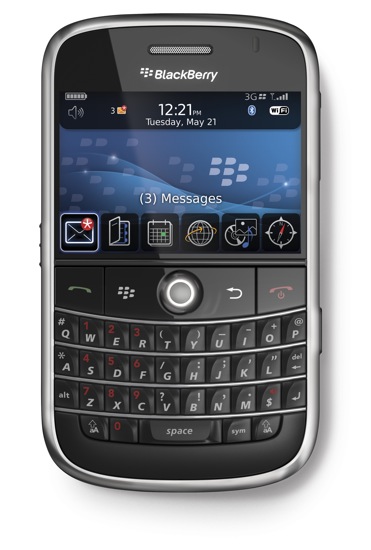 ...you are a Research In Motion (RIM) investor. The BlackBerry has made them a mountain of money, grew their shares' worth and has dominated the business consumer market. The BlackBerry Bold is already getting some righteous reviews. And, frankly, nobody even flinched at RIM when the new iPhone came out. RIM barely missed the revenue expectations, but the investors were pissed when they heard their profits had to wait because RIM is thinking long term. The investors decided to rain on RIM's parade on Wall Street. Thing is, what I've been reading for the passed day has indicated that there is room for both iPhone and BlackBerry in the market. (My vote: clearly the BlackBerry.)
Extra Readin':
6/23/08
Today's Knowledge: How technology can change how we think
 T-Bone sent me this great Atlantic Magazine article called "Is Google Making Us Stupid?" It's a great piece. You'll learn a ton about all sorts of things. This article is so thoughtful and exquisitely well-written that it really tickles the mind. For me, it was quite thought provoking and I found that it was well worth taking the time and effort to read it all the way through.
6/22/08
Today's Knowledge: Booze and Recovery
 Although I'm not hung over today, I did stay out late so I sort of might as well be. However, throwing back a few pops last night, staying up way passed my bedtime and then recovery reminded me of this fantastic New Yorker article called "A Few Too Many". This is an all-around great article about drinking. Knowledge-packed and entertaining reading.
6/21/08
Today's Knowledge: Overheard in the Office
Overheard in the Office is quite possibly the funniest daily dose of reality ever. It's so perfect and it gives you a peek into my sense of humor. I laugh a lot when I get this feed. For example, enjoy these two posts: Angry Suit and Perfect Poop.
Also, I clicked onto Overheard Everywhere, which is new and equally smashing. This stuff is like poetry. Nice.
Also, I clicked onto Overheard Everywhere, which is new and equally smashing. This stuff is like poetry. Nice.
6/20/08
Today's Knowledge: Body of War
This movie is opening up in Ann Arbor, MI today. This is going to be an important movie.

6/19/08
Ode to BlackBerry
I don't need a simple life. I love technology. Even though my knowledge of technology barely scratches the surface, I am a slave to it. When I hear folks talk about the "old days" and "back before computers" a chill runs down my spine. I like life packed with about a million things, otherwise boredom inevitably sets in. What can I say? I'm a Millennial and I have the attention span of a miniature poodle. You might call it crazy, but it's an everyday thing for a lot of people.
I digress. Once, iPod was my most prized electronic gadget. That was before the BlackBerry came into my life. While the iPod helped settle my craving for news, yoga and music, its functionality came nowhere near that of the BlackBerry (BB). Here are my reasons:
Productivity
It should be no surprise that I downloaded the entire Google package to my BB. I can quickly access Google searches. Google maps helps me find my way around, because I generally can't find my way out of a cardboard box. My Google calendar syncs with the BB calendar (though it misbehaves sometimes). And, of course, I need 'round the clock access to my email.
Beyond the Google goods, there's a memo pad that I use obsessively for everything from book review notes, to work-related projects, to poetry. And the to-do list has effectively crushed my procrastination habit. I enjoy the fact I can filter my tasks by category, assign them priorities and due dates, and add notes.
On a slight side note, I found that the new iPhone STILL doesn't have a copy-and-paste function. What's up with that, Steve Jobs??? I use copy and paste constantly on the BB. It just seems like a really useful option that isn't difficult to implement.
Connectivity
In addition to have access to all my email, I also enjoy the ability to check the weather, read news and chat. Chatting on mobile GTalk actually saves me money. Though people love to text, I'm not a fan. Hence, instead of blowing a bunch of dough on individual texts, I can have a written conversation with anyone that's on their Gmail.
Accuracy
Is Kansas City the capital of Missouri? What does ennui mean? Do we have this book at the library? How did the last out of the 3rd inning happen? What quantity of sesame seeds are called for in this recipe?
These are all questions that I answered by using my BlackBerry. At first, it took getting used to the fact some websites have a mobile view and others don't. Then, my buddy's husband found Opera Mini, a magnificent browser that allows you too look at basically any web page and switch from mobile to regular web views. The web is wide open for the mobile user.
Entertainment
My iPod is still the reigning champ of entertainment, but the BB does provide a camera. Having one on hand at all times is great fun. True, the picture quality is not amazing, but it still gets the job done. There are games, but I'm not too into those. BB also allows for various audio media, but I save my memory by keeping that kind of stuff left on the iPod.
Oh, and I can make phone calls on it, too.
I digress. Once, iPod was my most prized electronic gadget. That was before the BlackBerry came into my life. While the iPod helped settle my craving for news, yoga and music, its functionality came nowhere near that of the BlackBerry (BB). Here are my reasons:
Productivity
It should be no surprise that I downloaded the entire Google package to my BB. I can quickly access Google searches. Google maps helps me find my way around, because I generally can't find my way out of a cardboard box. My Google calendar syncs with the BB calendar (though it misbehaves sometimes). And, of course, I need 'round the clock access to my email.
Beyond the Google goods, there's a memo pad that I use obsessively for everything from book review notes, to work-related projects, to poetry. And the to-do list has effectively crushed my procrastination habit. I enjoy the fact I can filter my tasks by category, assign them priorities and due dates, and add notes.
On a slight side note, I found that the new iPhone STILL doesn't have a copy-and-paste function. What's up with that, Steve Jobs??? I use copy and paste constantly on the BB. It just seems like a really useful option that isn't difficult to implement.
Connectivity
In addition to have access to all my email, I also enjoy the ability to check the weather, read news and chat. Chatting on mobile GTalk actually saves me money. Though people love to text, I'm not a fan. Hence, instead of blowing a bunch of dough on individual texts, I can have a written conversation with anyone that's on their Gmail.
Accuracy
Is Kansas City the capital of Missouri? What does ennui mean? Do we have this book at the library? How did the last out of the 3rd inning happen? What quantity of sesame seeds are called for in this recipe?
These are all questions that I answered by using my BlackBerry. At first, it took getting used to the fact some websites have a mobile view and others don't. Then, my buddy's husband found Opera Mini, a magnificent browser that allows you too look at basically any web page and switch from mobile to regular web views. The web is wide open for the mobile user.
Entertainment
My iPod is still the reigning champ of entertainment, but the BB does provide a camera. Having one on hand at all times is great fun. True, the picture quality is not amazing, but it still gets the job done. There are games, but I'm not too into those. BB also allows for various audio media, but I save my memory by keeping that kind of stuff left on the iPod.
Oh, and I can make phone calls on it, too.
6/18/08
Podcast about Jim Kramer, Mr. Mad Money himself
Check out this podcast: "Booyah!"
This is a great 12-minute podcast about Mad Money's Jim Kramer. I really enjoyed learning more about him. He has a fascinating background and this is a very smart man. Plus, I really love the perfectly placed Mad Money sound bites ("Sell, sell, sell" and of course, "Booyah!"). It's well produced. Enjoy.
This is a great 12-minute podcast about Mad Money's Jim Kramer. I really enjoyed learning more about him. He has a fascinating background and this is a very smart man. Plus, I really love the perfectly placed Mad Money sound bites ("Sell, sell, sell" and of course, "Booyah!"). It's well produced. Enjoy.
6/17/08
Book Review: Loitering with Intent
by Muriel Spark
This was a fun book to read and I related to the main character for two main reasons: she's a woman and a writer. Fleur Talbot gets a job working for Sir Quentin who runs an Autobiographical Association. Fleur is part secretary, part editor and also the friend of Sir Quentin's mother, Lady Edwina, a devilish 90-something.
While working with Sir Quentin and a handful of other people in the group, Fleur writes and completes her first novel entitled Warrender Chase. The characters of her book have similarities to the people in the association. Those shared characteristics are less-than-flattering. The group gets wind of the book and the rest of the story includes deception, thievery and Lady Edwina going to the bathroom on the floor at precisely the right moment.
Loitering with Intent is a delight. It is light-hearted and very, very easy reading - just what I've been looking for lately. It also provides what I think is a pretty honest look into the literary starving artist's world. Also, it's important that I be frank: I don't think I'd recommend this book for men.
Other than vocabulary, this is the only note I took out of the book. It's a good one:
"When people say that nothing happens in their life I believe them. But you must understand that everything happens to an artist; time is always redeemed, nothing is lost and wonders never cease." (p. 116)
6/16/08
Is the sentence being butchered?
I just read this Washington Post article called "The Fate of The Sentence: Is the Writing On the Wall?" The article discusses how young people these days are poor writers and generally cannot form a sentence. My emotions were mixed when I finished the article. On one hand, the fact that only a third of eighth graders are proficient in writing is dismal. On the other hand, perhaps this is news that I should (secretly) delight in, since it looks like job security for writers out there already. Gosh, that was awful. I didn't mean that.
Writing workshops and clubs sound like such a great idea to me and I'd love to run one someday at a library. I'm trying to think of how it would be formatted. Would it be a casual, book club-like meeting? Would it be a themed writing workshop - like writing for employment, school, etc.? Perhaps it could be a combination. Something that concerns me about starting this kind of group is the different writing levels people start off at. Filling the gap between those that are fairly comfortable with writing and those that are novices would definitely effect the flow of the discussion.
The writing craft is fascinating; I read about regularly. Lately I've had the pleasure of having someone to talk with about writing, creation, imagination and the like. Some find the act of writing difficult. Others just let it rip effortlessly. In the end, I imagine every writer takes in their published work with pride.
A book that I recommend over and over and over again to all writers, fiction and non-fiction alike, is On Writing Well by William Zinsser, who is a writing bad ass.
Writing workshops and clubs sound like such a great idea to me and I'd love to run one someday at a library. I'm trying to think of how it would be formatted. Would it be a casual, book club-like meeting? Would it be a themed writing workshop - like writing for employment, school, etc.? Perhaps it could be a combination. Something that concerns me about starting this kind of group is the different writing levels people start off at. Filling the gap between those that are fairly comfortable with writing and those that are novices would definitely effect the flow of the discussion.
The writing craft is fascinating; I read about regularly. Lately I've had the pleasure of having someone to talk with about writing, creation, imagination and the like. Some find the act of writing difficult. Others just let it rip effortlessly. In the end, I imagine every writer takes in their published work with pride.
A book that I recommend over and over and over again to all writers, fiction and non-fiction alike, is On Writing Well by William Zinsser, who is a writing bad ass.
6/10/08
Sportsmanship is not dead.
A little while ago, I posted a book review on Made to Stick. In this review I mention a part of the book where words are overused. People get desensitized to their meaning and voila, they become meaningless. So this guy in the book says that "sportsmanship" becomes one of those overused and under appreciated words. He instead used the term, "Honoring the game" and got a much clearer message across.
Generally, I don't read people's comments on websites and blogs, but lately I've been doing my best to see how people react to various online material. I was reminded of sportsmanship and honoring the game when I browsed an excerpt from, of all papers, an L.A. Times article on Yahoo! called Pens-Wings will be remembered as the rebirth of hockey. Under this blurb was a WHOLE BUNCH of really positive, fun comments by people about the Stanley Cup Finals, a series with an exquisite helping of hockey. I imagine the positivity was due to some trimming of the jerks, but it made me happy that sportsmanship is not yet dead (except in Philadelphia).
You can read the entire L.A. Times column at Red Wings enjoy title down to the core. It's not bad hockey column for being out of L.A. - you know, where hockey goes to die at the hand of expansion.
Generally, I don't read people's comments on websites and blogs, but lately I've been doing my best to see how people react to various online material. I was reminded of sportsmanship and honoring the game when I browsed an excerpt from, of all papers, an L.A. Times article on Yahoo! called Pens-Wings will be remembered as the rebirth of hockey. Under this blurb was a WHOLE BUNCH of really positive, fun comments by people about the Stanley Cup Finals, a series with an exquisite helping of hockey. I imagine the positivity was due to some trimming of the jerks, but it made me happy that sportsmanship is not yet dead (except in Philadelphia).
You can read the entire L.A. Times column at Red Wings enjoy title down to the core. It's not bad hockey column for being out of L.A. - you know, where hockey goes to die at the hand of expansion.
6/9/08
Elderly behaving badly
Working at the library will introduce one to all walks of life. At the Southfield Public Library, we get a lot of senior citizens coming through. Generally, I think how great it must be to be retired and just read, read, read books to my heart's content. A lot of the elderly folks are very kind and are pleased beyond belief when they are served by the librarians here.
Yet, I've been noticing some senior citizens behaving badly lately. I'm not sure if it's because they are gaining in years and feel they are entitled to act like [insert expletive here], but it's getting sort of silly. For example, an unwritten rule here at SPL is that you do NOT kiss the librarians. One of the best librarians in the house was kissed by an elderly patron. Not cool. If you want to show your appreciation, fill out a comment card with fluffy prose. Don't forget to add our names. Kissing does nothing for us other than gross us out.
A second unwritten rule: don't kiss and then insult the other patrons. A week or two ago, another elderly lady came in and tried to kiss a patron's daughter. The older lady then started telling the patron and the patron's daughter that they were too fat and had to go on a diet. My colleague grabbed a piece of paper with call numbers on it, grabbed me and sharply whispered, "Get her out of here." I interrupted the patron's berating of the others and had her to walk to the stacks with me. It was embarrassing for everyone except the lady, who chuckled and asked me, "Oh, was I misbehaving?" I looked at her and said, "I'm just showing you where your books are."
A third patron of ours loves coming to the desk and acting high and mighty with his vast knowledge bank. He always tells us what he recommends and what we should be watching. Sometimes he tries to get folks to talk about inappropriate things at the desk, like God. Sorry dude, no can do. It was funny one day when he was trying to talk hockey with me. As soon as he began ragging on Nick Lidstrom I knew he was full o' crap. When I had a reply for every one of his ridiculously formed statements about the Detroit Red Wings, he looked at me and said, "How do you know so much about the Red Wings?" When I told him I wrote for the organization for 4 seasons, he realized that he was not the all-knowing party in the conversation. He left immediately and without a word. Silent victory was mine.
Finally, there's a patron who is a tutor and feels that he should be served right away, regardless whether there are patrons in front of him or not. Further, he SCREAMS his demands at the librarians from across the floor. He's also been calling people names and throwing around his age, like it's some pass for acting like a [insert expletive here]. He keeps threatening that he's going to tell the boss, but the boss isn't going to respond well to some dude that screams at and degrades his librarians.
Elderly folks really should know better. If you want to be respected, you must first show respect. Age isn't a "Get-respect-whether-you-are-civil-or-not" card.
Yet, I've been noticing some senior citizens behaving badly lately. I'm not sure if it's because they are gaining in years and feel they are entitled to act like [insert expletive here], but it's getting sort of silly. For example, an unwritten rule here at SPL is that you do NOT kiss the librarians. One of the best librarians in the house was kissed by an elderly patron. Not cool. If you want to show your appreciation, fill out a comment card with fluffy prose. Don't forget to add our names. Kissing does nothing for us other than gross us out.
A second unwritten rule: don't kiss and then insult the other patrons. A week or two ago, another elderly lady came in and tried to kiss a patron's daughter. The older lady then started telling the patron and the patron's daughter that they were too fat and had to go on a diet. My colleague grabbed a piece of paper with call numbers on it, grabbed me and sharply whispered, "Get her out of here." I interrupted the patron's berating of the others and had her to walk to the stacks with me. It was embarrassing for everyone except the lady, who chuckled and asked me, "Oh, was I misbehaving?" I looked at her and said, "I'm just showing you where your books are."
A third patron of ours loves coming to the desk and acting high and mighty with his vast knowledge bank. He always tells us what he recommends and what we should be watching. Sometimes he tries to get folks to talk about inappropriate things at the desk, like God. Sorry dude, no can do. It was funny one day when he was trying to talk hockey with me. As soon as he began ragging on Nick Lidstrom I knew he was full o' crap. When I had a reply for every one of his ridiculously formed statements about the Detroit Red Wings, he looked at me and said, "How do you know so much about the Red Wings?" When I told him I wrote for the organization for 4 seasons, he realized that he was not the all-knowing party in the conversation. He left immediately and without a word. Silent victory was mine.
Finally, there's a patron who is a tutor and feels that he should be served right away, regardless whether there are patrons in front of him or not. Further, he SCREAMS his demands at the librarians from across the floor. He's also been calling people names and throwing around his age, like it's some pass for acting like a [insert expletive here]. He keeps threatening that he's going to tell the boss, but the boss isn't going to respond well to some dude that screams at and degrades his librarians.
Elderly folks really should know better. If you want to be respected, you must first show respect. Age isn't a "Get-respect-whether-you-are-civil-or-not" card.
6/7/08
"Stimulus may be working" - Oh, really? On what planet?
Cranky Pants Warning: I am working at the library right now and it's 86 degrees inside. Our air conditioning is broken and I am not amused. Not cool. Literally, not cool, man. Hence the heat has made my mood foul. This blog is a product of that foul mood. My apologies in advance.
My Google Reader was jam packed today with over a thousand news bits and Internet treats for my review. I foolishly decided to look through the past few days of business news. Wow, what a total bummer.
First, a Wall Street Journal article basically wrapped up the terrible economic climate here in the United States:
In the investing world, securities ratings practice will hopefully be getting a makeover. This is very necessary as investors were buying securities under false pretenses. Here's a snippet from an article entitled Bond-rating agencies agree to reforms:
And finally, while we sit here and struggle, it's interesting to hear what world leaders think. For example Russian President Dmitry Medvedev criticized the U.S. for being economically egotistical. He says Russia has the answer for the mess that the U.S. has created. Shoot, at this point, I think we should accept assistance and advice from any place we can get!
Our fearless leader, however, is sort of on another planet. While plowing through all these articles predicting the wrath of economic crisis, I found that the president thinks that his stimulus package "might" be working. Well, isn't that just swell? From article 'Stimulus may be working' - Bush:
My Google Reader was jam packed today with over a thousand news bits and Internet treats for my review. I foolishly decided to look through the past few days of business news. Wow, what a total bummer.
First, a Wall Street Journal article basically wrapped up the terrible economic climate here in the United States:
Unemployment rose sharply and payrolls shrank for the fifth consecutive month. The economy news came on a day that oil surged to record prices, the dollar weakened and the Dow Jones Industrial Average plunged nearly 400 points. The deteriorating job numbers led markets to scale back the odds that the Federal Reserve will boost short-term interest rates this fall to ward off inflation.From this article, I also learned a new term - "misery index." This is the sum of the unemployment and inflation rates. The index is at the highest level since the early 1990s. There are many more gloomy details in the article, however, there was one, tiny bit of positive news:
The next article I read was called Consumer debt jumps $8.9 billion. While analysts knew that the amount of consumer debt would rise, they didn't expect it to be so bad. They expected the debt to rise by $7 billion when in actuality it rose by $8.9 billion. I discovered another term: "revolving credit." Revolving credit is an account on which payment is any amount less than the total balance and the remaining balance carried forward is subject to applicable finance charges. Basically, credit card debt is revolving credit. Fixed payments - student and car loans - sharply increased, making up $8.7 million of the $8.9 billion consumer debt accumulated.Service-sector employment, by contrast, gained 8,000 jobs last month. That reflects continued strength in education, health services and hospitality industries, offsetting losses in business and professional services and retail trade.
In the investing world, securities ratings practice will hopefully be getting a makeover. This is very necessary as investors were buying securities under false pretenses. Here's a snippet from an article entitled Bond-rating agencies agree to reforms:
With the old model, many investors purchased a security they believed to be safe because they had pristine AAA ratings, but in fact many of the assets were of poor quality. Critics and lawmakers have long argued that the rating industry did not adequately warn investors about the risks involved with mortgage investments.As you can imagine, this blog doesn't get any happier at any point. There's just too much bad stuff happening in the economy. It's rather strange that people are still hesitant to call this a recession when it clearly is. For example, if we weren't in a recession, why would Americans be $1.7 TRILLION dollars poorer or barely surviving on credit cards?
And finally, while we sit here and struggle, it's interesting to hear what world leaders think. For example Russian President Dmitry Medvedev criticized the U.S. for being economically egotistical. He says Russia has the answer for the mess that the U.S. has created. Shoot, at this point, I think we should accept assistance and advice from any place we can get!
Our fearless leader, however, is sort of on another planet. While plowing through all these articles predicting the wrath of economic crisis, I found that the president thinks that his stimulus package "might" be working. Well, isn't that just swell? From article 'Stimulus may be working' - Bush:
The government's $168 billion stimulus package, passed in February, began getting tax rebate checks to people last month and helped to energize shoppers. "We're beginning to see signs that the stimulus may be working," Bush said at the Department of Housing and Urban Development.
OK, so did anyone let the president know that Americans are $1.7 TRILLION dollars poorer? Does he not see that his little, bitty $168 billion stimulus package isn't going to be used for SHOPPING!? It's going to be used to SURVIVE: to buy food and gas, to pay the mortgage or rent - not to go on a shopping spree. So out of touch, this guy.
Feel free to read more about all this stuff. Here's the articles I read through:
- Recession Fears Reignited (WSJ)
- Consumer debt jumps $8.9 billion (CNNMoney.com)
- Corporate America is getting nervous (CNNMoney.com)
- Bond-rating agencies agree to reforms (CNNMoney.com)
- Americans $1.7 trillion poorer (CNNMoney.com)
- Barely surviving on credit cards (CNNMoney.com)
- Russian president blasts U.S. 'economic egotism' (CNNMoney.com)
- 'Stimulus may be working' - Bush (CNNMoney.com)
6/3/08
Natural Disasters: Tsunamis
Tsunamis (or 'Earthquakes' continued)
In December 2004, I was in Houston visiting with family. We were all gathered around the television after dinner and watching the breaking news coming out of Indonesia, Sri Lanka and surrounding places in the Indian Ocean. I remember being horrified at the site of the tsunami footage, but really didn't grasp the extent of the damage and devastation until we returned home after the holidays. The additional footage and developments were worse than anyone could have expected. In the end, the 2004 Indian Ocean tsunami took over 225,000 lives.
Definition
Tsunamis in History
I looked Facts on File World News Digest and found that following the 2004 Indian Ocean tsunami, there was a mixed bag of events. Some were improvements, like the creation of a global warning system or that the Paris Club of 19 creditor nations to temporarily freeze debt payments due from some countries. It does make me wonder exactly how "temporarily" those freezes were and what kind of fees and penalties might have been accrued to those countries.
Then some pretty terrible things happened. The tsunami had left about 1,000 Sri Lankan children orphaned and those children were recruited to be child soldiers for the Liberation Tigers of Tamil Eelam (LTTE), which the U.S., Britain and India list as a terrorist organization.
There were major agricultural losses reported. U.N. Food and Agriculture Organization senior officer Daniel Renault had said there was evidence that about 40,000 hectares (100,000 acres) of rice-paddy fields in Indonesia and 800 hectares of farmland in Thailand had been ruined by the tsunami. In Sri Lanka wetlands were contaminated by salt water, leaking fuel and other pollution from debris. Agricultural ecosystems in the region would never be the same again.
Finally, I was saddened, though not very surprised when I read that "because the areas hit by the earthquake and tsunami were relatively undeveloped economically, with no important industrial centers or ports destroyed, the financial cost of the disaster was expected to be relatively small given the enormity of the humanitarian catastrophe it represented.
Because the vast majority of victims of the tsunami were poor and uninsured, the cost to insurers was expected to be low compared with the $27 billion cost associated with summer hurricanes that hit the southeastern U.S. and destroyed many insured homes and businesses." The same article mentioned that the local economic burdens would be tremendous, but it just seems so ludicrous that monetarily speaking this natural disaster was considered fairly "cheap" even though the cost of human life was so high.
In December 2004, I was in Houston visiting with family. We were all gathered around the television after dinner and watching the breaking news coming out of Indonesia, Sri Lanka and surrounding places in the Indian Ocean. I remember being horrified at the site of the tsunami footage, but really didn't grasp the extent of the damage and devastation until we returned home after the holidays. The additional footage and developments were worse than anyone could have expected. In the end, the 2004 Indian Ocean tsunami took over 225,000 lives.
Definition
Check out this USGS Publication entitled, "Surviving a Tsunami—Lessons from Chile, Hawaii, and Japan." Lots of interesting information, maps and images."A tsunami is an unusually large sea wave produced by an underwater earthquake, a landslide, or volcanic activity...Tsunamis are set in motion by the sudden shifting of the seafloor (a vertical or sliding movement), which in turn raises or lowers the water on the ocean surface above. Gravity immediately acts to level the surface water, setting up a wave that travels outwardly as an expanding circle in all directions. [The waves] can be 20 to 70 feet (6 to 21 meters) high, their lengths can be measured in hundreds of miles, and their speeds can reach 500 miles per hour (800 km per hour). Because they are similar to swells, they are not usually noticeable on the open sea and ships cross them unaware. On arrival at the shore, however, their effects can be devastating."
Source: Langbein, Walter B. "Tsunami." Encyclopedia Americana. 2008.
Tsunamis in History
- Santorini, 1650-1600 B.C.
Eruptions on the volcanic Greek island of Santorini caused a tsunami that, according to archaeologists, destroyed Minoan civilization on the island of Crete. - Awa, Japan, 1703
An earthquake caused a tsunami that killed more than 100,000 people. - Lisbon, Portugal, November 1, 1755
An earthquake caused a tsunami and subsequent fires that killed about 90,000 of Lisbon�s 275,000 people and destroyed much of the city. - Krakatoa, Indonesia, August 27, 1883
The volcanic island of Krakatoa erupted, causing land and seabed around it to collapse and generating a tsunami felt from the West Coast of the U.S. to the English Channel. - Aleutian Islands, Alaska, April 1, 1946
An earthquake caused a tsunami that killed 165 people in Hawaii and Alaska and spurred creation of the Pacific Tsunami Warning System. - South Central Chilean Coast, May 22, 1960
An estimated 490 to 2,290 people were killed by the largest recorded earthquake ever, and a subsequent tsunami that spread across the Pacific Ocean as far as Japan. - Prince William Sound, Alaska, March 27, 1964
The "Good Friday Earthquake" sent a tsunami that hit the Canadian province of British Columbia and the Pacific coast of the U.S., killing 122 people. - Indian Ocean, 2004
An earthquake off the coast of Indonesia�s Sumatra island caused the deadliest tsunami in history. It hit at least 13 countries and had killed an estimated 140,000 people as of December 31, 2004.
I looked Facts on File World News Digest and found that following the 2004 Indian Ocean tsunami, there was a mixed bag of events. Some were improvements, like the creation of a global warning system or that the Paris Club of 19 creditor nations to temporarily freeze debt payments due from some countries. It does make me wonder exactly how "temporarily" those freezes were and what kind of fees and penalties might have been accrued to those countries.
Then some pretty terrible things happened. The tsunami had left about 1,000 Sri Lankan children orphaned and those children were recruited to be child soldiers for the Liberation Tigers of Tamil Eelam (LTTE), which the U.S., Britain and India list as a terrorist organization.
There were major agricultural losses reported. U.N. Food and Agriculture Organization senior officer Daniel Renault had said there was evidence that about 40,000 hectares (100,000 acres) of rice-paddy fields in Indonesia and 800 hectares of farmland in Thailand had been ruined by the tsunami. In Sri Lanka wetlands were contaminated by salt water, leaking fuel and other pollution from debris. Agricultural ecosystems in the region would never be the same again.
Finally, I was saddened, though not very surprised when I read that "because the areas hit by the earthquake and tsunami were relatively undeveloped economically, with no important industrial centers or ports destroyed, the financial cost of the disaster was expected to be relatively small given the enormity of the humanitarian catastrophe it represented.
Because the vast majority of victims of the tsunami were poor and uninsured, the cost to insurers was expected to be low compared with the $27 billion cost associated with summer hurricanes that hit the southeastern U.S. and destroyed many insured homes and businesses." The same article mentioned that the local economic burdens would be tremendous, but it just seems so ludicrous that monetarily speaking this natural disaster was considered fairly "cheap" even though the cost of human life was so high.
6/2/08
Book Review: The Natural
by Bernard Malamud
Lately I've been looking for some feel good books and thought that one about baseball would work well. Even though the Detroit Tigers are making baseball insufferable for me I was still into the Big League spirit. Hence, I decided to pick up another classic. The book was pretty good, but there was just one problem: it was NOT a feel good book.
The Natural was made into a movie and though I never saw it, I thought that it seemed like a family-friendly, feel-good flick. After reading the book, however, I figure one of two things is true: the movie is actually dark and not-so-family-friendly or Hollywood managed to yet again suck the genuine soul out of a great story. Once the story started getting heavy, I realized that I started reading the book under false pretenses and was surprised to find the story so grim. The read was most pleasing, nonetheless.
First, this is a great baseball story. If you're a baseball fan, it would behoove you to check this piece of literature out. It certainly has the feel of a classic work of sports fiction and at one point I thought of it as a more adult version of Catcher in the Rye.
The book is short and very, very fun to read (well, except for the tragic/gloomy or tense/awkward moments). It has lots of cool vocabulary. Some of the words I include here, but you can see more at my Twitter timeline at www.twitter.com/evagro. I enjoyed reading some vintage terms like "jawjacking" and "dame". Here's a couple of my favorite baseball terms:
- pill, pellet, apple: nicknames for a baseball
- southpaw: a leftie
- fungo: when a batter throws the ball up himself to hit it
- bird dogging: to seek out talent, in this book, scouts bird dogging at local sandlots.
- bingle: base hit
You can tell this book is a renowned sports fiction work. There are unforeseen twists early (well, unforeseen for people that haven't seen the movie). Many parts of the story show the shady side of ball players with their lust for women and moronic practical jokes. The reader also gets a nice serving of typical baseball superstitions, including the famous rabbit's foot.
There's an excellent passage on page 69 about the condition of the New York Knights baseball team when Hobbs shows up to save them. Writing brilliance:
"He [Hobbs] watched them and he felt he had to laugh. They were a nutty bunch to begin with but when they were losing they were impossible. It was like some kind of sickness. They threw to the wrong bases, bumped heads together in the outfield, pass each other on the baselines, sometimes batted out of order, throwing both Pop and the ump into fits, and cussed everybody else for their mistakes."
That paragraph goes longer, but it's so good you'll just have to read the book to enjoy the rest. It's darn entertaining. Throughout the book, Malamud offers vivid descriptions of all the characters in the sport's world: bird doggers, journalists, players, coaches and fans. Not a lot has changed since then.
Just when you think the tragedy is done with, you get a little more to put a damper on things. A lot of the characters are trying work their way through some kind of gloom. One of the best passages involves a big time bookie, Gus. In response to what people gamble on, Gus says:
"On anybody or anything. We bet on strikes, balls, hits, runs, innings, and full games. If a good team plays a lousy team we will bet on the spread of runs. We cover anything anyone wants to bet on. Once in a Series game I bet a hundred grand on three pitched balls."
Hobbs' poison the entire story is women and food. It almost seems that he doesn't want to force women to do anything, but when they refuse him he turns to food. He eats so much that he becomes quit ill. In the end, he is engulfed by them same ego-filled attitude and lifestyle of Bump, the guy he continued to compete with even after Bump dies.
I do not like Roy Hobbs. He seems like a dumb, sexist pig (and I'm no feminist, mind you). At the same time he's a crybaby and a headcase. On the outside he tries to appear strong, but on the inside he has a feeble mind. Plus, I hate it when professional athletes hate the fans when they are so dedicated to their heroes. Barry Bonds hates fans; he stinks. Hobbs hates the fans; he stinks.
Again, great baseball book, but not a pick-me-upper. Recommended for the sports fan. Also, seems like a good book for males in general.
Subscribe to:
Posts (Atom)